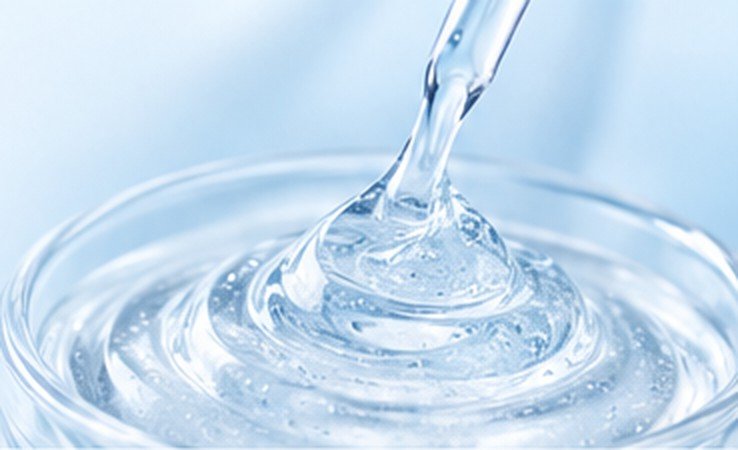
Carbomer for Aloe Vera Gel: Grade Selection & Neutralization

Quick answer: For aloe vera gel, use a carbomer that tolerates salts, such as an Ultrez 10/20/21-type grade, at about 0.3–0.5%. Sprinkle it into deionized water, let it hydrate for 30–60 minutes, then neutralize slowly to pH 6.0–7.0. Aloe powder and aloe extract add salts and acids that thin standard carbomers like 940 and 980, so grade choice matters more here than in a plain water gel.
Aloe vera gel looks like the easiest formula there is: water, aloe, a thickener. Even so, the same four complaints keep coming up. The gel stays thin, white specks won’t dissolve, the batch fills with bubbles, or the viscosity drops after a day or two. Nearly all of them trace back to how the carbomer was chosen and handled.
What goes into a basic aloe vera gel
A basic gel has five components:
- Deionized or purified water
- Aloe vera freeze-dried powder (for example 200:1), aloe extract, or both
- Carbomer
- A neutralizer
- A preservative
Carbomer is a crosslinked acrylic acid polymer. In the powder its chains are tightly coiled. When a neutralizer raises the pH, the acid groups become charged, repel each other, and force the chains to uncoil and swell. That swelling is the gel. Dissolved salts screen those charges, so the chains uncoil less and viscosity falls. Aloe powder and aloe extract both bring polysaccharides, organic acids and minerals into the water, and tap water adds more. This is why a carbomer that makes a perfect gel in pure water can come out thin once aloe is added.
Which carbomer grade works best in aloe vera gel?
| Grade | Behavior in aloe systems | Notes |
|---|---|---|
| Carbomer 940 / 980 (for example AM-980) | Clear and high in viscosity in low-salt water; viscosity drops noticeably as aloe and electrolyte content rise | Suits gels with low aloe content or soft water |
| Ultrez 10 / 20 / 21-type (for example AM-U20) | Disperse more easily and generally tolerate ions better | A practical choice for aloe gels, where salts and acids are always present |
| A blend: main grade plus a second carbomer or polymer at 8:2, 7:3 or 6:4 | Changes flow, body and stringiness | Useful when a single grade feels too stiff or too stringy |
Results depend on aloe load, water quality and the neutralizer, so confirm any choice with a small trial batch before scaling up.
How to make a 300 mL aloe vera gel (starting formula)
Treat these numbers as a first trial, not a finished formula. A 300 mL batch weighs roughly 300 g.
- Make the water phase. About 60% of the batch is purified water with the aloe powder dissolved in it. About 40% is aloe extract. Mix until uniform.
- Add the carbomer. Use 0.3–0.5% of the batch weight, which is about 0.9–1.5 g for 300 g. Sprinkle it slowly over the surface while stirring gently. Don’t pour it in as a lump.
- Let it hydrate. Leave the batch alone for 30–60 minutes. Skipping this step leaves white specks (“fish eyes”) and trapped air.
- Neutralize. Add triethanolamine (TEA), AMP or a dilute NaOH solution in small portions, stirring slowly, and check the pH. Viscosity builds as the pH rises toward 6.0–7.0. Aloe is mildly acidic, so expect to use more neutralizer than in a plain water gel.
- Add the preservative. Choose one that works at pH 6–7 and is compatible with anionic polymers, because cationic ingredients can make carbomer precipitate. The dose depends on the preservative and on local regulations.
- Rest and check. After two hours, look at clarity, viscosity and trapped air again. A gel often looks different once the bubbles have risen out.
Troubleshooting
| Problem | Likely cause | What to do |
|---|---|---|
| White specks (“fish eyes”) | Carbomer added too fast or not fully hydrated; powder absorbed moisture | Add slowly, allow full hydration, keep the container tightly closed |
| Bubbles | Hard stirring after the gel began to thicken | Stir slowly before neutralizing; deaerate under vacuum in production or let the batch rest |
| Low viscosity | Too little carbomer, high electrolyte load, pH too low | Check pH first, then consider a salt-tolerant grade or a higher dose |
| Gel thins after a few days | Electrolytes, pH drift, unsuitable grade | Re-check pH after 24 hours, change grade, verify preservation |
| Cloudy or stringy gel | Incompatible (cationic) ingredient, or too much neutralizer | Review the ingredient list and reduce the neutralizer |

From gel to body lotion
Adding oils such as squalane or jojoba turns the gel into a light body lotion, and that requires an emulsifier. In this kind of system carbomer stabilizes the emulsion: it holds the oil droplets in suspension and adds body.
Help choosing a carbomer grade
Ascend Materials supplies carbomer grades for personal care and pharmaceutical applications. If you are developing an aloe vera gel or another clear gel and want to compare grades, send us your formula and target viscosity and we will suggest samples to test. You can reach us through pvpmaterials.com.