Carbomer 980 vs. 981 Application Guide: Selection Logic & Avoidable Formulation Failures
Selecting the wrong acrylic acid polymer grade often leads to severe quality issues—ranging from paste collapse and turbidity to syneresis and nozzle clogging.
This technical summary breaks down the formulation logic, successful case studies, and critical warnings when choosing between Carbomer 980 and Carbomer 981.
1. Core Application Comparison: Formulation Targets & Failure Warnings
To streamline your laboratory development and avoid batch losses during scale-up, reference the decision matrix below based on your target formulation profile:

2. Visualizing Rheology: High Yield vs. Flowable Spreading
The fundamental driver behind grade selection is cross-linking density.
Carbomer 980: High Yield & Non-Drip Structure
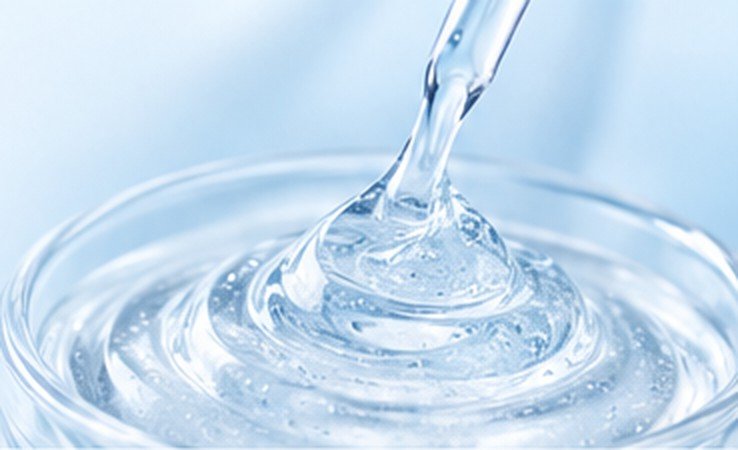
Carbomer 980 features a densely cross-linked network designed for rigid gels and suspended formulations. As shown below, it forms a defined, standing peak that maintains structural integrity against gravity.

- Key Strengths: High suspension power for heavy particulates (e.g., clays, glitters, zinc oxide) without phase separation.
- Avoid Using When: Formulating with ionic active ingredients like Niacinamide salts, Potassium Chloride, or Vitamin C, which destroy 980’s polymer backbone.
Carbomer 981: Superior Clarity, Electrolyte Tolerance & Sprayability
Carbomer 981 possesses lower cross-link density, offering a longer rheology flow. It flows evenly without clogging fine mist spray heads, making it ideal for low-viscosity lotions and active-rich clear gels.
- Key Strengths: Outstanding clarity, high salt resistance, and compatibility with hydroalcoholic spray systems.
- Avoid Using When: Formulating dense sleeping masks or suspension clays that require high initial yield strength to avoid settling.
Technical Data & Sample Requests
Need complete Certificates of Analysis (COA) or laboratory evaluation samples? We supply high-purity Carbomer 980 and Carbomer 981 for cosmetic and personal care formulations worldwide.
Request Free 500g Evaluation Samples on WhatsApp
Or email us at sales@pvpmaterials.com
Choosing between Carbomer 980 and 981 and not sure which rheology fits your spray or gel target? Contact us for samples, a COA, and a TDS — or browse the full Carbomer range.