PVPP (Polyvinylpolypyrrolidone, commonly known as Crospovidone) is a crosslinked, water-insoluble form of povidone. Unlike soluble PVP grades, PVPP works through rapid water uptake and swelling rather than dissolution — a property that makes it valuable in two very different industries: pharmaceutical tablet disintegration and beverage clarification.
Product · Crosslinked Povidone
PVPP (Crospovidone / Polyvinylpolypyrrolidone)
CAS: 25249-54-1Grades: Pharma (USP/EP), Beverage

Technical Specifications
| CAS Number | 25249-54-1 |
|---|---|
| Appearance | White to off-white free-flowing powder |
| Solubility | Insoluble in water and most organic solvents (crosslinked structure) |
| Water uptake | Rapid capillary water uptake and swelling |
| Pharmacopoeia compliance | USP/NF, EP |
CAS Number
25249-54-1
Appearance
White to off-white free-flowing powder
Solubility
Insoluble in water and most organic solvents (crosslinked structure)
Water uptake
Rapid capillary water uptake and swelling
Pharmacopoeia compliance
USP/NF, EP
Grade Comparison
Crospovidone is classified into Type A (coarser particle size, better filterability) and Type B (finer particle size, higher adsorption capacity) per USP/EP monograph standards — the grade selection guidance below is based on this classification.
AM-XLType A
Particle size: 40 – 120 μm
White or off-white powder
AM-XL10Type B
Particle size: 20 – 40 μm
White or off-white powder
AM-SLType B
Particle size: ≤20 μm
White or off-white powder
Documentation
- Certificate of Analysis (CoA) with every shipment
- Pharmacopoeia compliance (USP/NF / EP)
- MSDS / TDS available on request
Key Applications
PVPP across pharmaceutical tablet disintegration and beverage clarification & stabilization.

Tablet Superdisintegrant
One of the most widely used superdisintegrants in tablet formulation — strong capillary action and swelling capacity rapidly break tablets apart on contact with water or gastric fluid, improving dissolution rate and bioavailability, especially valuable in direct-compression formats.
Learn more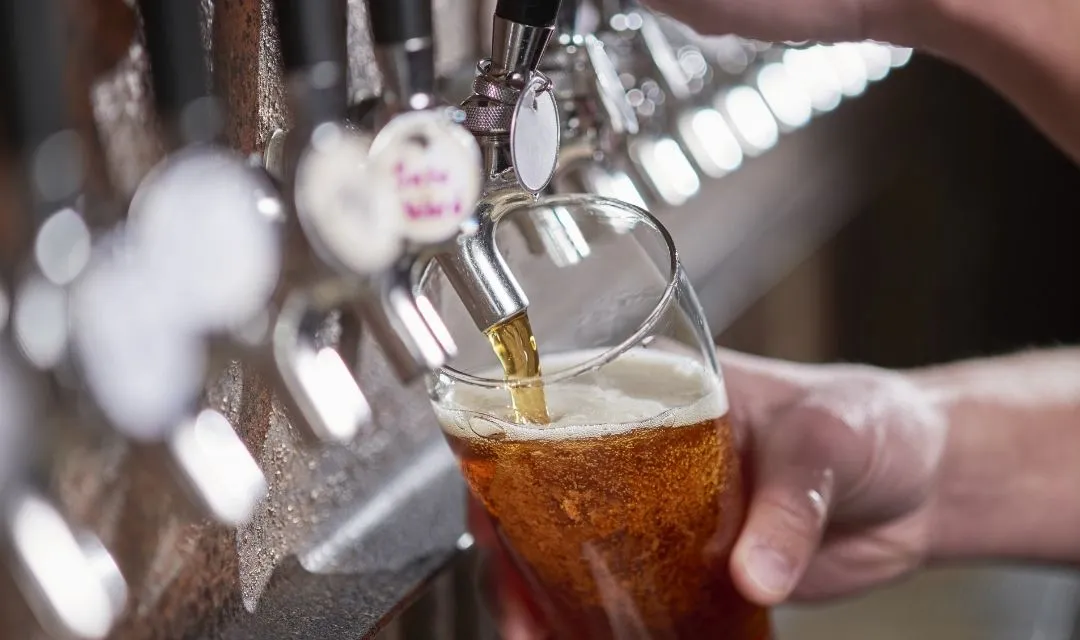
Beverage Clarification & Stabilization
A standard clarifying and stabilizing agent in beer, wine, and juice production — its insoluble, highly porous structure adsorbs haze-causing polyphenols and tannins, keeping beverages clear and stable over shelf life without altering desirable flavor compounds.
Learn moreChoosing the Right Particle Size for Beverage Clarification
Grade selection for beer, wine, and juice clarification comes down to two factors working against each other: adsorption capacity and filterability.
Smaller particle size → higher adsorption, higher filtration risk. A smaller particle size means a larger surface area relative to volume, which increases polyphenol adsorption capacity — the finer the PVPP, the more haze-forming compounds it can pull out of solution per unit dose. The trade-off is filterability: finer particles are more prone to clogging filtration equipment, especially in systems without adequate filter capacity.
Larger particle size → easier filtration, lower adsorption per dose. Coarser grades flow through filtration systems more easily and are less prone to clogging, at the cost of somewhat lower adsorption efficiency per unit weight — often offset by adjusting dosage.
Single-use by design. Our standard PVPP grades are intended for single-pass adsorption and are not designed for regeneration or reuse within the same production run. Customers requiring multi-pass or continuous filtration setups will need appropriate filtration equipment on their end to recover and separate the PVPP after use.
Let us know your filtration setup and target haze/polyphenol reduction, and we can recommend the particle size grade that balances adsorption performance against your equipment's filtration capacity.
Frequently Asked Questions
What's the difference between PVPP and soluble PVP grades (like K30)?
PVP (soluble grades) dissolves in water and functions as a binder, film former, or dispersant. PVPP is chemically crosslinked and does not dissolve — instead it rapidly absorbs water and swells, which is why it is used for tablet disintegration and beverage clarification rather than binding or film formation.
How does PVPP compare to PVP K15/K30 for beverage clarification?
Both are used in beverage clarification, but they work differently: soluble PVP grades primarily complex with polyphenols in solution, while PVPP's insoluble, porous structure physically adsorbs haze-forming compounds and can be filtered out afterward. Many beverage producers use PVPP specifically for its filterability and strong polyphenol adsorption capacity.
Which pharmacopoeia standards does your PVPP comply with?
Manufactured to comply with USP/NF and EP monograph requirements, with batch documentation available for regulatory filings.
Do you provide certificates of analysis for each batch?
Yes, a batch-specific COA is provided with every shipment.
How do I choose the right PVPP particle size for beer or wine clarification?
It depends on your filtration setup: finer particle sizes offer higher polyphenol adsorption but are more prone to clogging filters, while coarser grades filter more easily at a slightly lower adsorption rate per dose. Our standard grades are single-use — let us know your filtration capacity and target haze reduction and we'll recommend the right grade.